
Venezuela Between OPEC+ and the U.S. in an Oversupplied Oil Market
Venezuela isn’t just another producer but a founding pillar of OPEC, with massive reserves that could matter again, even as it would be coming back into a market already leaning toward oversupply in 2026.
U.S. companies are increasingly calling the shots in Venezuela’s oil sector, in line with Trump’s clear preference for bilateral deals rather than working mainly through multilateral institutions.
Until very recently, Venezuela had a visible seat at the OPEC+ table, led by Delcy Rodríguez, who represented Caracas in key meetings and kept stressing the country’s commitment to producer coordination.
Fabbiana Lamboglia is an Energy Analyst at Orinoco Research.
After years of low production, shrinking exports, and an almost invisible role in global oil markets, Venezuela’s oil sector is suddenly back in the spotlight. As a result of the dramatic events in Venezuela, the removal of Nicolás Maduro, the rise of an interim government led by Delcy Rodríguez, and the announcement by U.S. President Donald Trump that Washington would take a central role in managing and reviving Venezuela’s oil industry.
Beyond the geopolitical tensions playing out across the world, Venezuela would be re-entering an oil market that is already dealing with an oversupply in 2026. That changes the stakes of its return. It is no longer just about whether the country can bring barrels back online or rebuild its infrastructure, but about what that comeback would actually mean in a market where there is already more oil than demand can comfortably absorb. In that context, Venezuela’s return to the global energy conversation raises bigger questions than pipelines and production levels, it forces us to think about who will control Venezuelan oil, how it will be brought back to market, and whether the country will continue to operate primarily as an OPEC member or move toward a different set of rules.
Venezuela and the Birth of OPEC
Back in the 1960s, long before Venezuela became a country in crisis or disappeared from global oil charts, it was actually one of the countries that helped design how the oil market would work. In 1960, Venezuela joined Iran, Iraq, Kuwait and Saudi Arabia to create the Organisation of the Petroleum Exporting Countries, having a clear goal, which was to stop oil-producing nations from being price-takers in a market dominated by foreign companies. One of the main architects of that idea was Juan Pablo Pérez Alfonzo, Venezuela’s Minister of Mines and Hydrocarbons at the time. He believed oil producers needed to act together, and that the oil exporters’ group was created to give countries like Venezuela real influence in a system that would otherwise sideline them.
The 2026 oil surplus
So, according to the International Energy Agency, the global oil market is heading into 2026 with a growing supply surplus. In 2025, the world was already producing almost two million barrels per day more than it was consuming, and that gap is expected to widen. Most of the new supply is coming from the Middle East and the Americas, while demand growth remains relatively slow. At the same time, large volumes of oil are being stored, especially in China and other non-OPEC+ countries, which shows that the market is absorbing less oil than producers are putting out.
What makes this especially important is how it affects prices and market psychology. Even when geopolitical tensions rise, oil prices struggle to move higher because traders know there is a buffer of excess supply sitting in storage. The IEA warns that this kind of imbalance cannot last forever, eventually either production will have to slow, demand will have to rise, or prices will fall enough to force a correction.
OPEC+ chooses caution in early 2026
In early January 2026, OPEC made it pretty clear that it’s playing it safe. On 4 January 2026, eight key producers — Saudi Arabia, Russia, Iraq, the UAE, Kuwait, Kazakhstan, Algeria, and Oman — met virtually to assess the global market. They reaffirmed their decision, first taken in November 2025, to pause planned production increases for February and March 2026 because demand is usually weaker at the start of the year. Beyond that, they stressed that the 1.65 million barrels per day currently withheld could only return gradually, if at all, depending on market conditions, and that the earlier 2.2 million barrels per day of voluntary cuts would remain in place. They also reiterated that any country that overproduced since January 2024 would have to compensate later, and committed to holding monthly meetings, starting on 1 February 2026, to keep a close track of the market.
On top of that, the Vienna-based organisation also issued a brief note saying it had received updated compensation plans from Iraq, the UAE, Kazakhstan, and Oman. Basically, how these countries plan to offset the oil they produce above their quotas. It’s a detail, but it shows that OPEC+ is still closely watching its members and keeping a tight grip on how much oil actually makes it to the market.
Two opposing logics: bilateral power versus multilateral coordination
This dynamic is not new. The Trump administration has repeatedly shown a preference for bilateral, country-to-country agreements over working through multilateral institutions. A recent example is the U.S.–Slovakia nuclear cooperation agreement announced in January 2026, which followed direct negotiations between Washington and Bratislava to develop a new nuclear unit with U.S. technology and commercial support. The deal was negotiated outside broader EU-level energy coordination, reinforcing a pattern in which Washington´s foreign energy policy prioritises national interests and direct leverage over collective frameworks.
This contrast becomes even more revealing when we consider the institutional differences at play. The European Union is a supranational political and economic integration project, where member states have pooled significant portions of their sovereignty across areas such as trade, competition, and energy regulation. OPEC+, by comparison, is a multilateral alliance built around a much narrower objective, coordinating oil supply among fully sovereign states with more flexible commitments. If Washington has been willing to prioritise bilateral deals even when engaging with an institution as deeply integrated as the EU, it raises questions about how the United States might approach a group like OPEC+.
Venezuela, caught between two oil logics
One of the reasons Venezuela sits right at the centre of this tension is simply because it is an OPEC country, and not just any member, but a founding one. According to Reuters, even U.S. President Donald Trump has openly acknowledged this. In a January 2026 interview, Trump said that he believes it would be better for Venezuela to remain in the organisation, while also admitting he is not sure whether that would actually serve U.S. interests. That ambiguity says a lot. Venezuela is being pulled closer to U.S. energy management and bilateral deals, yet it remains formally tied to a group whose entire logic is collective supply coordination.
At the same time, Venezuela’s current leadership has consistently framed its oil policy through the organisation. Delcy Rodríguez, who now heads the government, has been one of Venezuela’s most visible figures within the organisation for years. She received the OPEC Secretary General in Caracas in October 2024, when she was Executive Vice President and Minister of Petroleum, and later represented Venezuela at the OPEC International Seminar in Vienna in July 2025. In those settings, her message was clear that Venezuela continues to see OPEC+ as a key space for coordination and market stability. This is what makes the situation so complex, as Caracas is trying to operate within a multilateral producer framework while its oil sector is increasingly shaped by a bilateral relationship with the United States..
OPEC Silence and Venezuela’s Uncertain Role
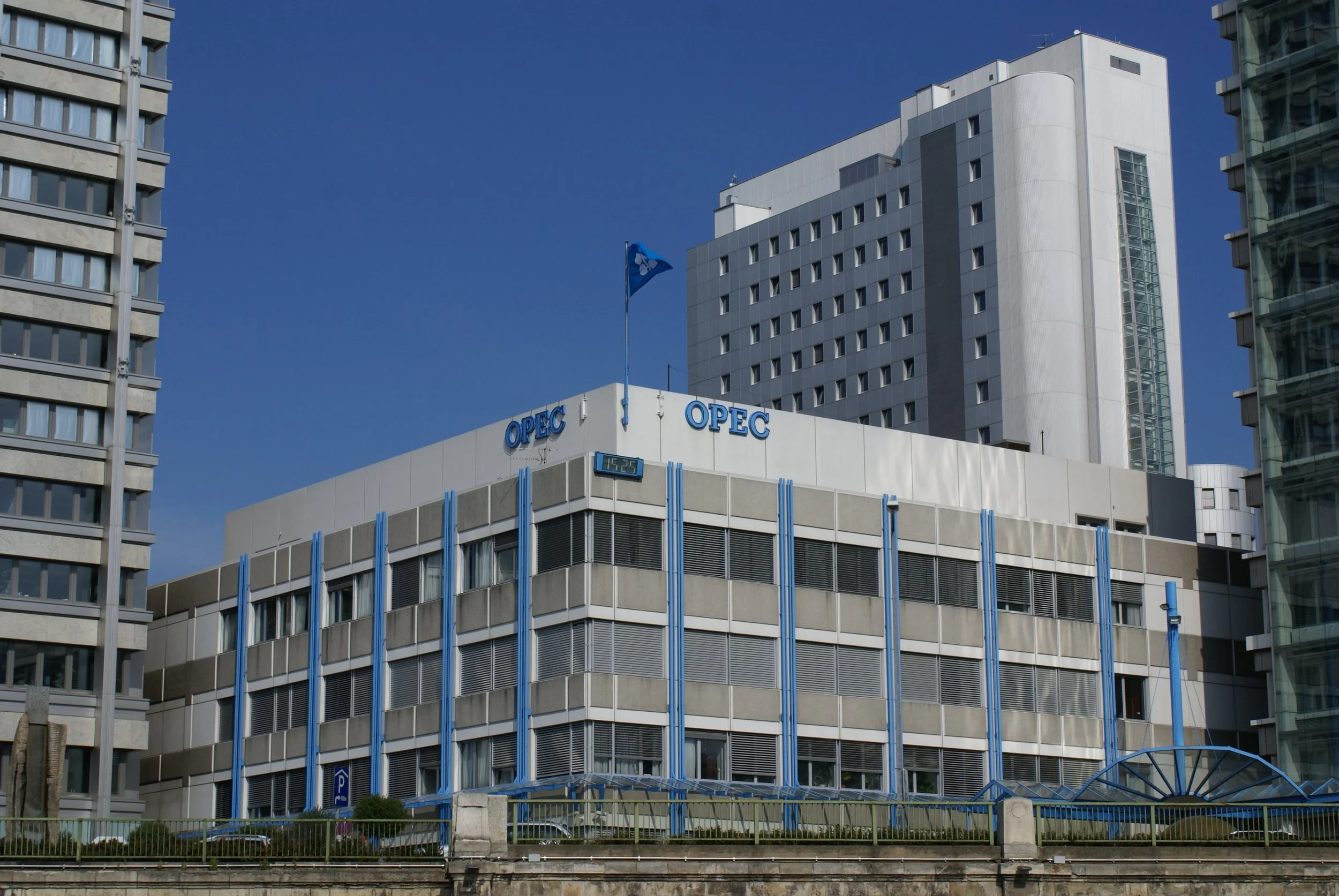
What’s striking is that, despite everything that has happened, OPEC has stayed silent. In December, Venezuela sent a formal letter to the organization asking for support against what it described as direct U.S. aggression, warning that these actions threaten both its oil production and global market stability. So far, however, the alliance of oil-producing countries has not issued any public statement on the situation in Venezuela, even though the country is a founding member of the group. That silence adds another layer of uncertainty to Venezuela’s position within an alliance that is actively trying to manage a fragile oil market.